


In Anji, Zhejiang, there is a company that has deeply rooted itself in the medical supplies industry for nearly 40 years — Anji Hongde Medical Supplies Co., Ltd. (hereafter referred to as Hongde Medical).
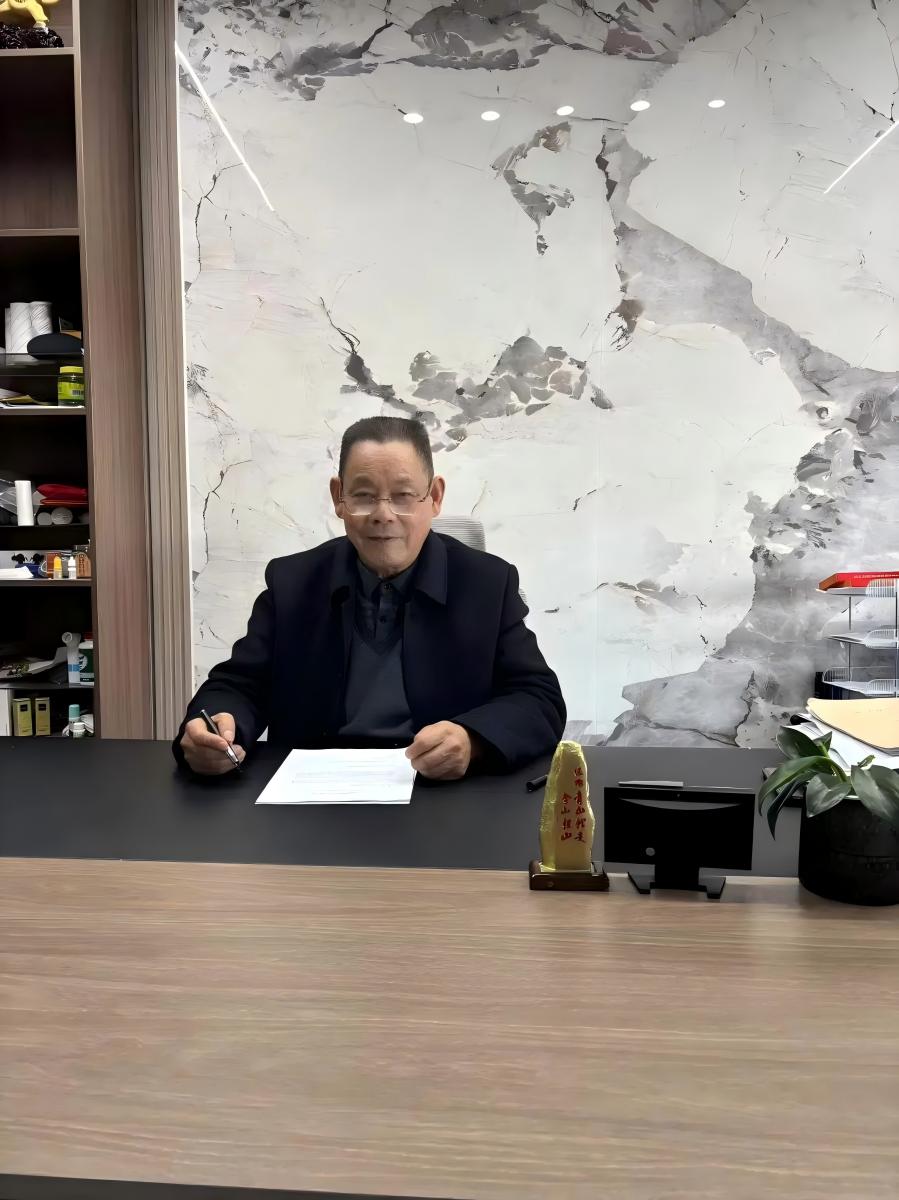
Starting from the era of the planned economy and still exploring new frontiers today, Hongde Medical’s growth has resonated with the pulse of China’s economic development. Rarely does a company embed social responsibility into its DNA, providing shelter and support for people with disabilities. At its helm is Zhang Yuegen, a legendary entrepreneur: a veteran who started from scratch, launched two ventures, and remains at the forefront of strategic thinking and decision-making in his seventies.
This is a true entrepreneurial story spanning China’s reform and opening-up, market transition, and industrial upgrading. It is also a long-term practice of responsibility, vision, and perseverance by a private entrepreneur.
A “Bold Venture” in the Planned Economy Era
His connection with the medical industry began by chance.
In 1984, 31-year-old Zhang Yuegen was the director of an automobile repair factory in Anji. To expand the business, he traveled widely in search of new projects. In Shanghai, he came into contact with a company manufacturing plaster bandages. Overwhelmed by orders and short of production capacity, the company offered him a cooperation opportunity. At that time, Anji had no real medical supplies enterprise, while domestic demand for plaster bandages was surging.
Zhang Yuegen took on the project decisively. “It was still the planned economy then; medical supplies were a strictly regulated industry. Project approval and production capacity allocation required layers of review. Fortunately, the project matched market demand, so the factory was built smoothly.” In 1985, his medical supplies factory — the predecessor of Hongde Medical — officially went into production.
The era rewarded those who dared to try. In its second year, the factory achieved a profit of 500,000 yuan, a miracle in an era when “ten-thousand-yuan households” were extremely rare.
An even more crucial opportunity came from the international market.
In the early 1990s, Johnson & Johnson of the United States took a fancy to Zhang’s plaster bandages and proposed cooperation. “During our meeting, I asked if they could lend me 5 million yuan to build a factory. They thought I ‘asked for 5 million yuan’ and conducted a serious assessment.” After detailed calculations, Johnson & Johnson finally provided 400,000 US dollars (equivalent to 3.75 million yuan) free of charge to support his factory expansion. “This was rare in China’s medical industry cooperation with foreign partners — no strings attached, purely recognition of our products and strength.” Zhang still takes pride in recalling this moment.
Starting Anew: A Second Venture at 53
In 2006, Zhang Yuegen made a surprising decision: to launch a second venture and build his own medical supplies brand. “Relatives and friends opposed it, saying I was too old to bother. But I knew the medical industry had huge social demand. I had product ideas and resources, and I believed I could succeed.” Thus, he founded Anji Hongde Medical Supplies Co., Ltd., with 100,000 yuan as startup capital, in an 80-square-meter private house, with four employees.
“Many people asked: Where would products be sold? Where would capital come from? How to recruit staff?” Zhang’s answer was simple and firm: “Products sell worldwide, capital comes from the market, and talents are attracted by growth.”
In 2008, Zhang and his team successfully developed a new type of plaster bandage with quality surpassing international brands of the time. “An American company came to China sourcing products. A Shanghai competitor sent four samples to the US, all failing tests. Then the client found us. They placed a full container order after the first sample, and immediately 18 more containers after using the first batch.” This large order propelled Hongde Medical’s rapid growth. The company still supplies this American client today, with annual sales of about 5 million yuan. Zhang said these products are used in American schools for extracurricular activities, well-received for reliable quality and high cost-effectiveness, and remain a flagship product of Hongde Medical.
Alongside technological innovation, Hongde Medical has taken a leading role in formulating industry standards. In November 2024, the national industry standard for plaster bandages, initiated and applied by Hongde Medical, was successfully reviewed and adopted. “At the meeting, I stated that after adopting the domestic standard, we will apply for a global industry standard.” Zhang’s confidence came from solid product strength. “Our products are high-quality and low-cost, competitive with global counterparts.”
Forging a New Future
After steady growth, Zhang Yuegen refused to stand still. To expand the product line, he turned to Anji’s distinctive resource — bamboo. “Anji is a land of bamboo, rich in bamboo resources that sell at low prices. I wondered: could bamboo replace wood and plastic to make medical and daily products?”
After repeated trials and countless failures, Zhang’s team successfully developed three series: bamboo tongue depressors, bamboo swab sticks, and bamboo ice cream sticks. For example, bamboo tongue depressors are smooth, burr-free, and tough, solving the pain points of wooden products — easy to scratch patients and break. They quickly gained market popularity. In 2024, a Japanese client inspected the factory and reached a cooperation agreement; demand for bamboo tongue depressors in Japan is expected to reach 10 million pieces in 2026. “Bamboo swab sticks and ice cream sticks are also popular. We sold 1,000 tons of swab sticks in 2025; output will double in 2026, with a target of exceeding 4,000 tons by 2028.”
From 2025, Hongde Medical has moved toward higher standards, striving for Class II and Class III medical device manufacturing qualifications. “Class I products have low thresholds and fierce competition. I plan to outsource Class I production and focus on Class II and Class III to enhance corporate competitiveness,” Zhang said.
While expanding the product line, Zhang also plans to build factories overseas. “The country now encourages Chinese brands to go global. Our plaster bandage technology is mature and quality-competitive; we are confident to take root overseas.” He proposed an ambitious plan: to establish joint ventures in ten countries within three years.
Zhang plans to visit six countries — Algeria, Bangladesh, Malaysia, Dubai, Afghanistan, and Egypt — right after the Year of the Horse Spring Festival. His strategy is clear and pragmatic: build factories with local partners that have mature sales channels and existing cooperation with Hongde. Hongde will hold 20%–40% shares, control core technology, and let partners handle production and sales. “I visited Vietnam and found Chinese enterprises that built wholly owned factories there now face difficulties and want to withdraw, losing equipment and workshops. Our cooperation model is more stable.”
Shouldering Social Responsibility
Social responsibility has always been central to Hongde Medical’s development. In 2009, at the initiative of the Anji Disabled Persons’ Federation, Zhang founded Anji’s first work therapy station for people with disabilities, employing 12 local people with intellectual disabilities. “These people caused trouble due to intellectual disabilities, bringing great hardship to their families and pressure on the government. A staff member’s relative was in this situation, so I deeply understood their struggles and wanted to share social responsibility.”
“It was tough at first. People with disabilities could not work and were hard to manage. Once someone threw a cigarette into cotton, causing a fire that required four fire engines to put out,” Zhang recalled frankly. He almost gave up at one point. “The pressure was enormous. I stayed up all night and cried in bed the day of the fire.”
Despite hardships, Zhang persisted. At Hongde Medical, employees with disabilities receive comprehensive care and support: the company covers all insurance premiums; monthly salaries have risen from 750 yuan in 2009 to about 1,900 yuan today, far exceeding the local minimum wage; dedicated staff provide work guidance and daily assistance; three couples with disabilities have been helped to marry. When building a new factory in 2024, Zhang invested 8 million yuan in a “Home for Persons with Disabilities” integrating leisure, entertainment, and work therapy.
“These people cannot manage money, cook, or wash clothes, and have no one to care for them after retirement. I want to build a nursing home for persons with disabilities,” Zhang’s plan is full of warmth. “Those who can work keep working; those who cannot stay in the nursing home for care and activities. The company will subsidize their salaries so they have no worries.”
Today, Hongde Medical has more than 70 employees with disabilities, accounting for nearly a quarter of its total staff. “We are a tax-exempt enterprise. All tax refunds from the government are used for people with disabilities to ease social pressure. This means more than any profit.”
Postscript
Coincidentally, on the day of the interview, Huzhou’s drug regulatory authorities were conducting Class II medical device qualification inspections at Hongde Medical. As the interview concluded, Zhang received the good news that the inspection had been passed. Though confident beforehand, he was greatly encouraged by the final result. “A person must have confidence and spiritual strength. I hold high expectations for this company. In three years, Hongde Medical will undergo profound changes.”
At 74, an age when many enjoy retirement, Zhang sees a new starting point. He embodies the tenacity of a veteran, the decisiveness of an entrepreneur, the wisdom of a leader, and the warmth of an ordinary person. The story of Hongde Medical is not only a corporate growth history but also a vivid reflection of China’s private enterprises — rooted in quality, striving far with responsibility.
Post time: Apr-21-2026